
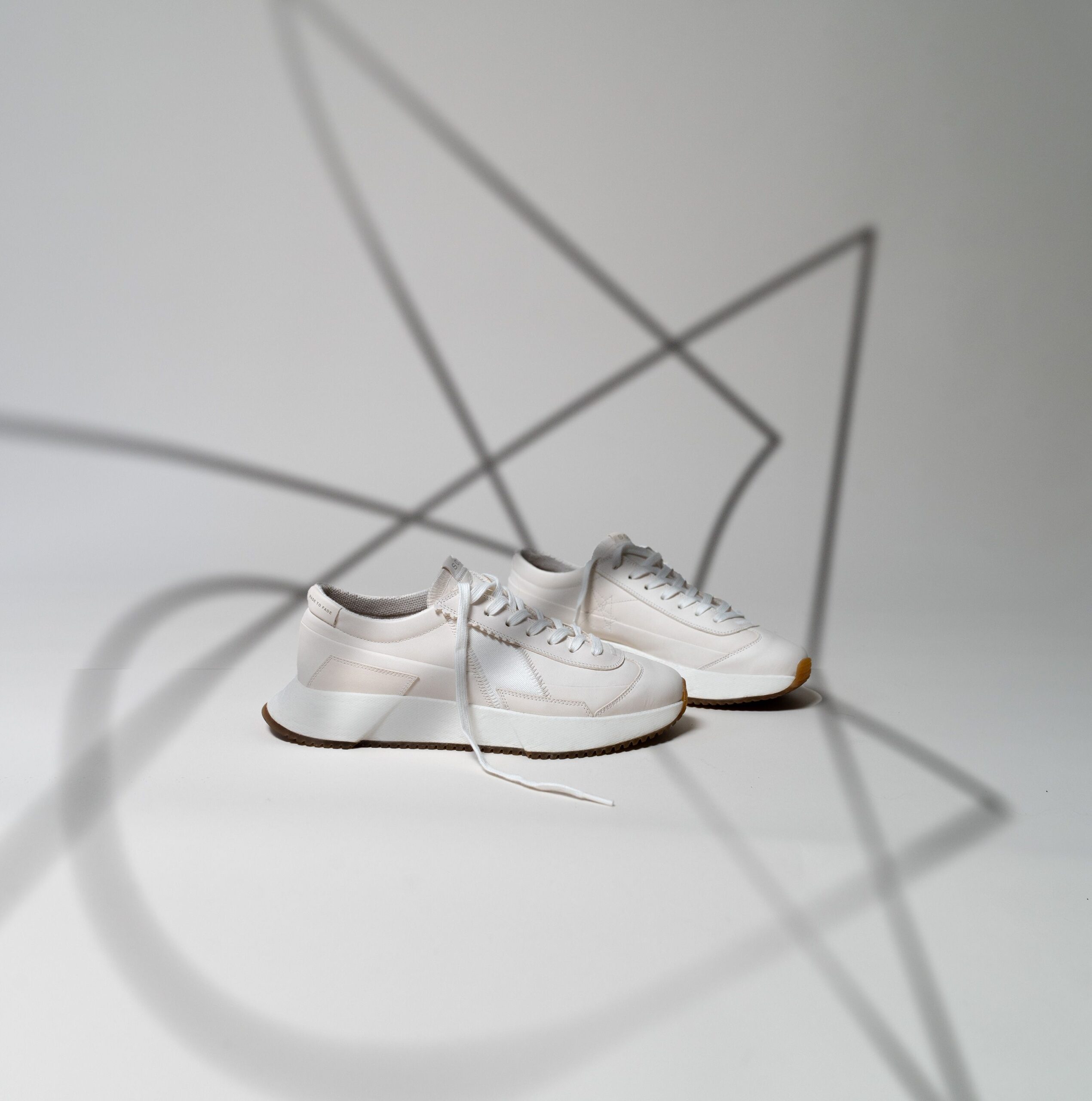
In Conversation with David Solk: The Footwear Veteran Designing Shoes That Can Disappear
July 2, 2026Most sneakers are designed to last. Few are designed to end well. For decades, the footwear industry has focused on performance, comfort, and aesthetics — while quietly ignoring what happens when a shoe reaches the end of its life.
David Solk, founder of Swiss footwear brand SOLK, is asking that question out loud. With nearly forty years spent inside the industry — developing and manufacturing shoes for some of the world’s biggest brands — he brings a rare perspective to the challenge of biocircular design: not as an outsider critiquing the system, but as someone who helped build it.
Fade 101, SOLK’s debut shoe, is his first answer. Fresh off winning Sport Apparel Design of the Year at the FIT Sport Design Awards, he speaks to us about what it takes to rethink a product from the ground up — and why a great shoe still has to be a great shoe first.
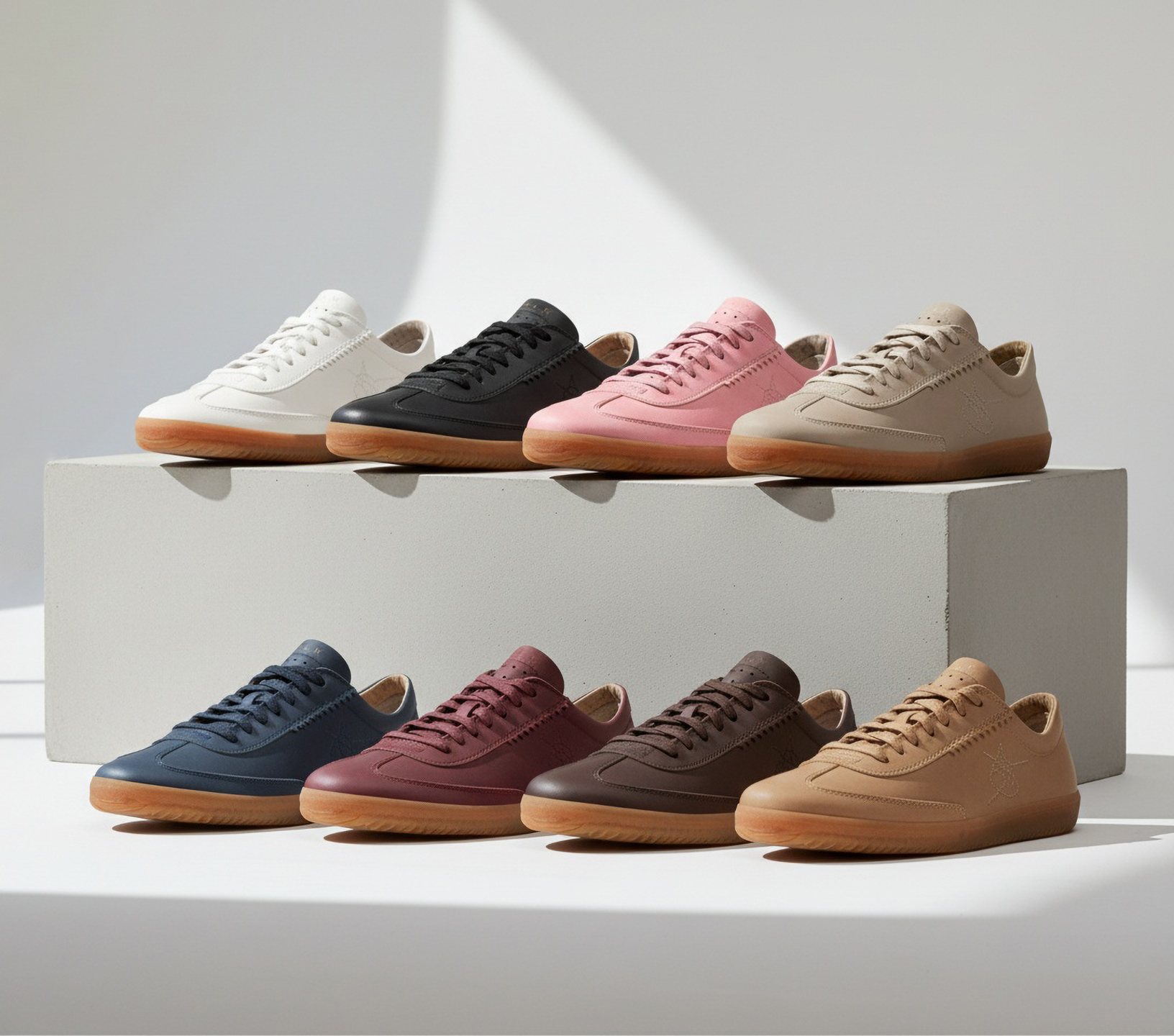
Can you tell us a bit about your backstory? How did your experience in shoemaking lead you to create SOLK and Fade 101?
I’ve spent almost forty years in footwear. Not talking about shoes. Actually making them.
I started as a teenager in my father’s shoe factory and have spent my career designing, developing, sourcing and manufacturing footwear for brands around the world. Along the way I’ve been fortunate to help create millions of pairs of shoes and work with some remarkable people.
What I love about footwear is that it sits at the intersection of design, engineering, craftsmanship and human behaviour. A great shoe can genuinely improve somebody’s day. But after decades in the industry, I found myself becoming increasingly uncomfortable with one question. We spend enormous amounts of time discussing where products come from. We spend remarkably little time discussing where they go. At some point I realised I didn’t want to spend the final chapter of my career simply making slightly better versions of the same thing.
SOLK became an opportunity to challenge some assumptions that have existed in footwear for generations and ask a different question: What would a truly modern footwear company look like if we designed it from the ground up today?
Fade 101 is our first answer.
What first inspired you to question what happens to sneakers at the end of their life?
The moment that really crystallised it for me happened in 2018. I was at a school sustainability event in Vietnam where students were presenting projects and discussing environmental challenges. One of the Grade 6 students put up her hand and asked me a very simple question: “Why are all sneakers made from plastic? And where do they go when people throw them away?”
The reason that question stopped me in my tracks was because I had already spent more than thirty years in the footwear industry. I’d helped develop shoes for global brands. I’d spent most of my life in factories and development centres. I’d helped put millions of pairs of shoes into the world. And yet I didn’t have an answer I felt proud to give. The student asking the question happened to be our daughter, Isobel. That made it even harder. Because suddenly this wasn’t an industry discussion. It was a conversation about responsibility.
The footwear industry has become incredibly good at designing products for the beginning of their lives. Performance. Comfort. Cost. Aesthetics. We’ve spent far less time thinking about what happens at the end. That question stayed with me. And eventually it led to another question: What if we took everything we’d learned from decades of making footwear and created products that people genuinely love wearing, but are also designed to leave no lasting burden behind?
That question became SOLK.
What were you looking to achieve with the design of Fade 101?
Honestly? We wanted to create a shoe people would fall in love with. That was the brief. Not a sustainable shoe. Not a compostable shoe. A beautiful Swiss-engineered shoe.
Quite simply, one of the most comfortable shoes we’ve ever created. A shoe that quietly becomes somebody’s favourite. The kind of shoe people reach for every morning without thinking. If people buy Fade 101 because they love wearing it, we’ve succeeded. If they later discover it also happens to be biocircular and designed to be Ultimately Harmless™, that’s even better.
Nobody buys a great bottle of wine because the vineyard has an excellent recycling programme. They buy it because the wine is exceptional. Footwear should be no different.
Can you expand on your choice of materials and why they were right for this project?
Every material decision started with the wearer, not with sustainability. How does it feel? How does it age? Does it become more beautiful over time? Does it contribute to comfort? Would I personally want to wear it every day? Only then did we ask whether it belonged within a biocircular system. One of the biggest misconceptions is that sustainability is a materials problem. In reality, it’s a design problem. People often assume there is some magical material waiting to solve everything. There isn’t. The challenge is designing an entire system. One unsuitable component can compromise the integrity of the whole product. Fortunately, one advantage of spending most of your life in factories is that you learn very quickly where theory meets reality. Owning our own development and manufacturing capabilities allowed us to experiment, challenge assumptions and refine every component until the system worked as a whole. The hardest part wasn’t finding better materials. The hardest part was getting every component to work together without compromising comfort, quality or desirability. 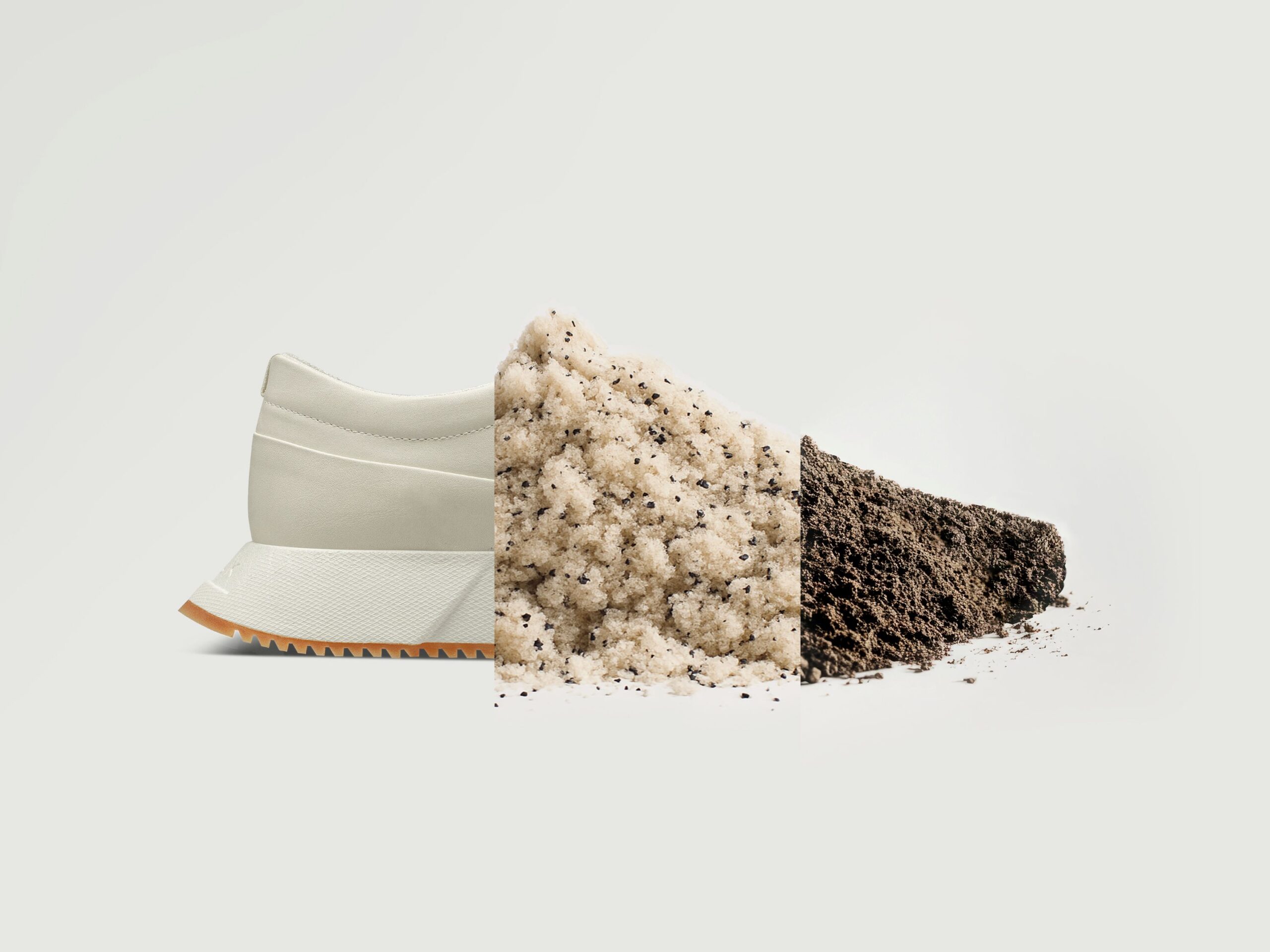
How did designing a sneaker that can return to compost influence its shape, construction and comfort?
More than people might imagine. One of the biggest surprises was discovering that constraints often improve design. People tend to think constraints limit creativity. My experience has been the opposite. When every material, every component and every process has to justify itself, you naturally start removing complexity. Modern footwear often feels like it has become an arms race of complexity.
More layers. More materials. More technologies. More claims.
We became interested in what happens when you move in the opposite direction. The result is a shoe that feels natural, balanced and exceptionally comfortable. Biocircularity wasn’t something added afterwards. It became part of the design process itself.
Congratulations on winning Sportswear Design of the Year at the FIT Awards! Can you share what this recognition means for SOLK?
What excites me most is that this is a design award. To be honest, I’d much rather win a design award than a sustainability award. That distinction matters. If products like ours only receive recognition because they are environmentally responsible, they remain a niche. If they receive recognition because they are simply excellent products, then something much bigger starts to happen. For me, this award suggests the conversation is evolving. Design quality and responsibility are no longer being viewed as opposing forces. That’s incredibly encouraging. It’s also a wonderful validation for a small team that has spent years questioning accepted wisdom and occasionally being told certain things couldn’t be done.
Looking ahead, how do you hope biocircular design will change the future of footwear?
I don’t think every shoe in the future will be compostable. Nor should it be. Different products have different requirements.
What I do hope is that designers start asking better questions. Not just: How does this product perform? But also: What happens next? Where do the materials come from? How are they used? Where do they go when their job is finished? One day I hope designers and consumers find it strange that products were ever created without considering where they would ultimately end up. When that happens, we’ll know genuine progress has been made.
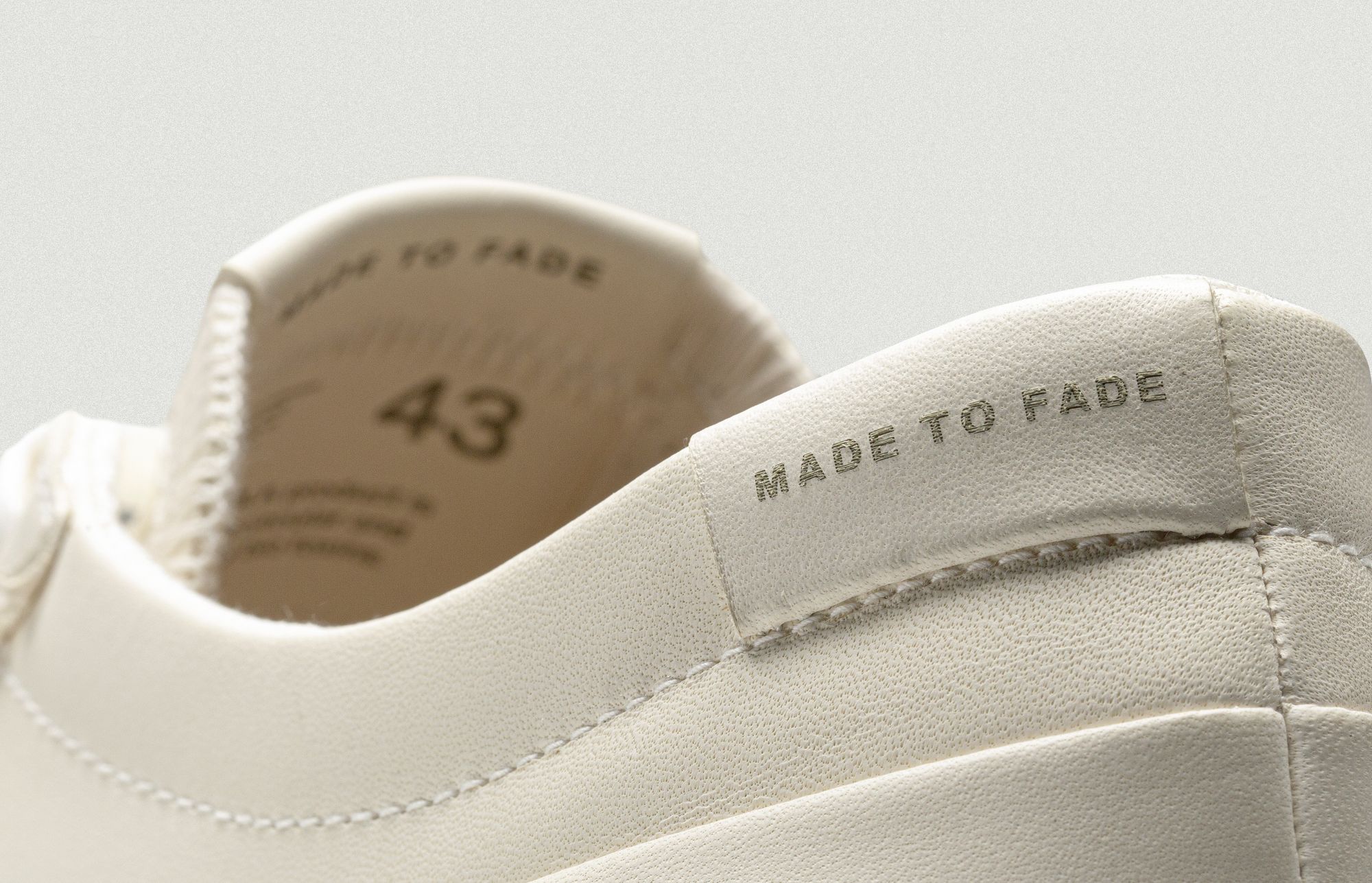
What does “Made to Fade” mean?
Made to Fade is probably the simplest expression of our philosophy. Everything eventually reaches the end of its useful life. Everything. The strange thing is that many products are designed as though that moment will never arrive. Made to Fade doesn’t mean making products that wear out quickly. Quite the opposite. We want our shoes to be loved, worn and enjoyed for years. But when that journey eventually comes to an end, we believe products should be able to leave the world gracefully rather than becoming a permanent burden for future generations. It’s simply acknowledging reality and designing accordingly.
SOLK describes its products as “Ultimately Harmless™”. What does that mean?
Most sustainability conversations focus on doing less bad. Use a little less water. Generate a little less waste. Create a little less impact. Those are worthwhile goals, but they never really inspired me. Ultimately Harmless™ asks a different question. What would happen if products were designed from the outset to leave no lasting harm behind once they have fulfilled their purpose? It’s not a claim of perfection. Far from it. It’s a direction of travel. A challenge we set ourselves. A reminder that reducing harm and eliminating harm are very different ambitions. Will we ever achieve it perfectly? Probably not. But perfection has never been the point. Direction matters.
What would success look like for SOLK?
Success isn’t selling millions of pairs of shoes. I’ve already been fortunate enough to be part of businesses that have done that. Success for me would be something much simpler. Ten years from now, I’d love to see a young designer working for a major footwear brand who finds it completely normal to consider what happens to a product at the end of its life. Not because of SOLK specifically. But because the industry has moved on. Some of the most meaningful changes happen when ideas stop being revolutionary and simply become obvious. If we’ve helped make that happen, I’ll be very happy.