
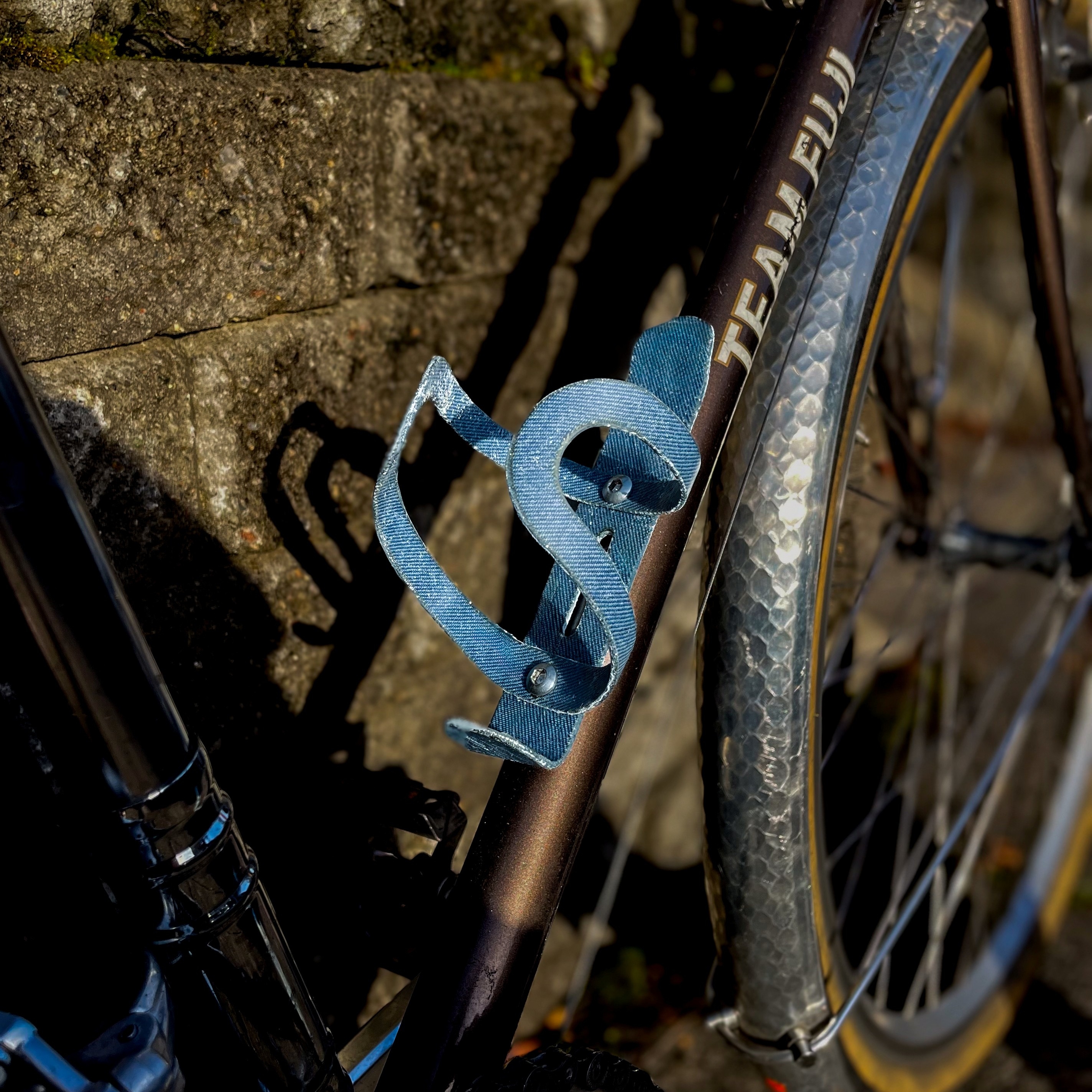
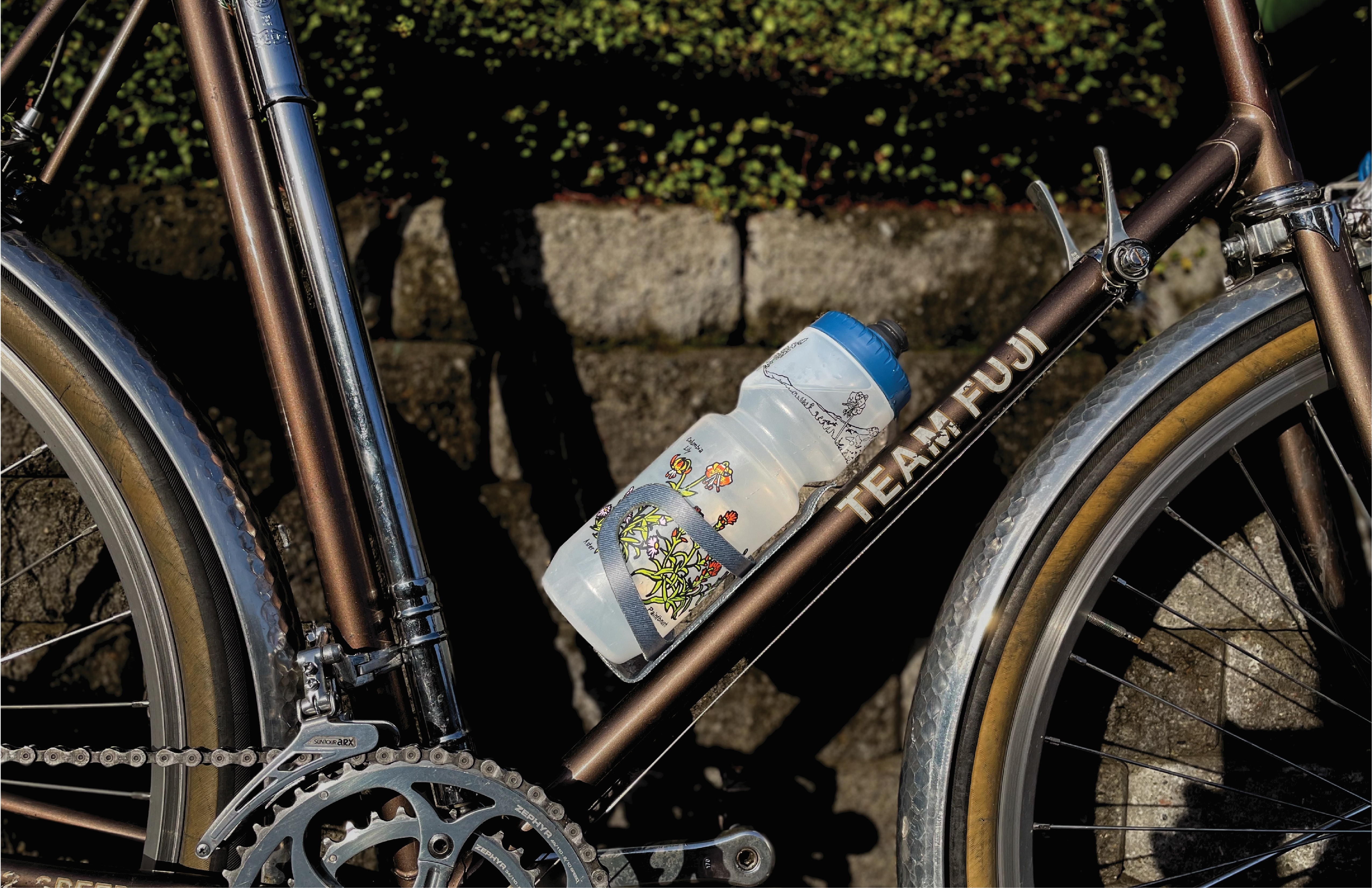
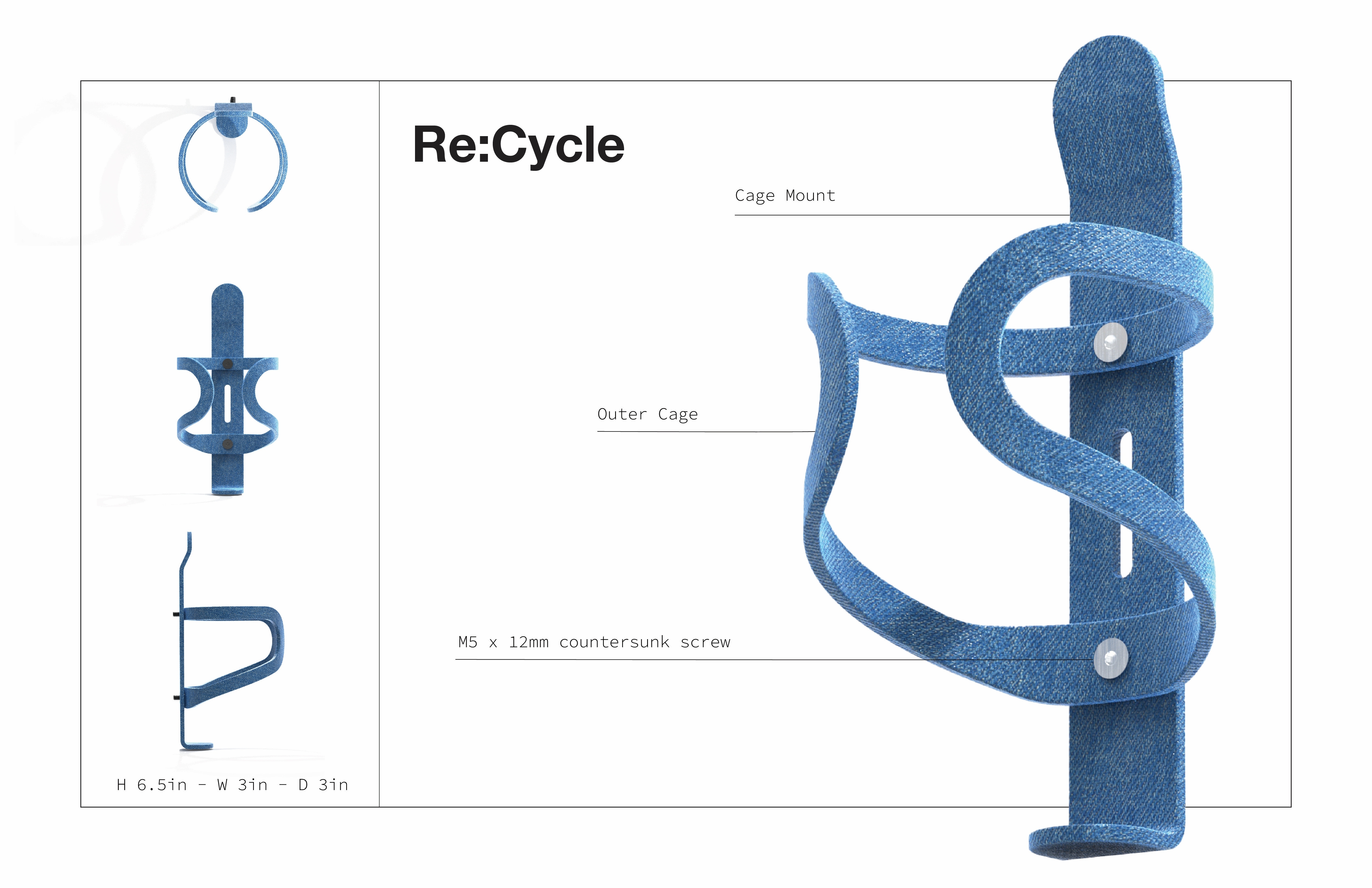
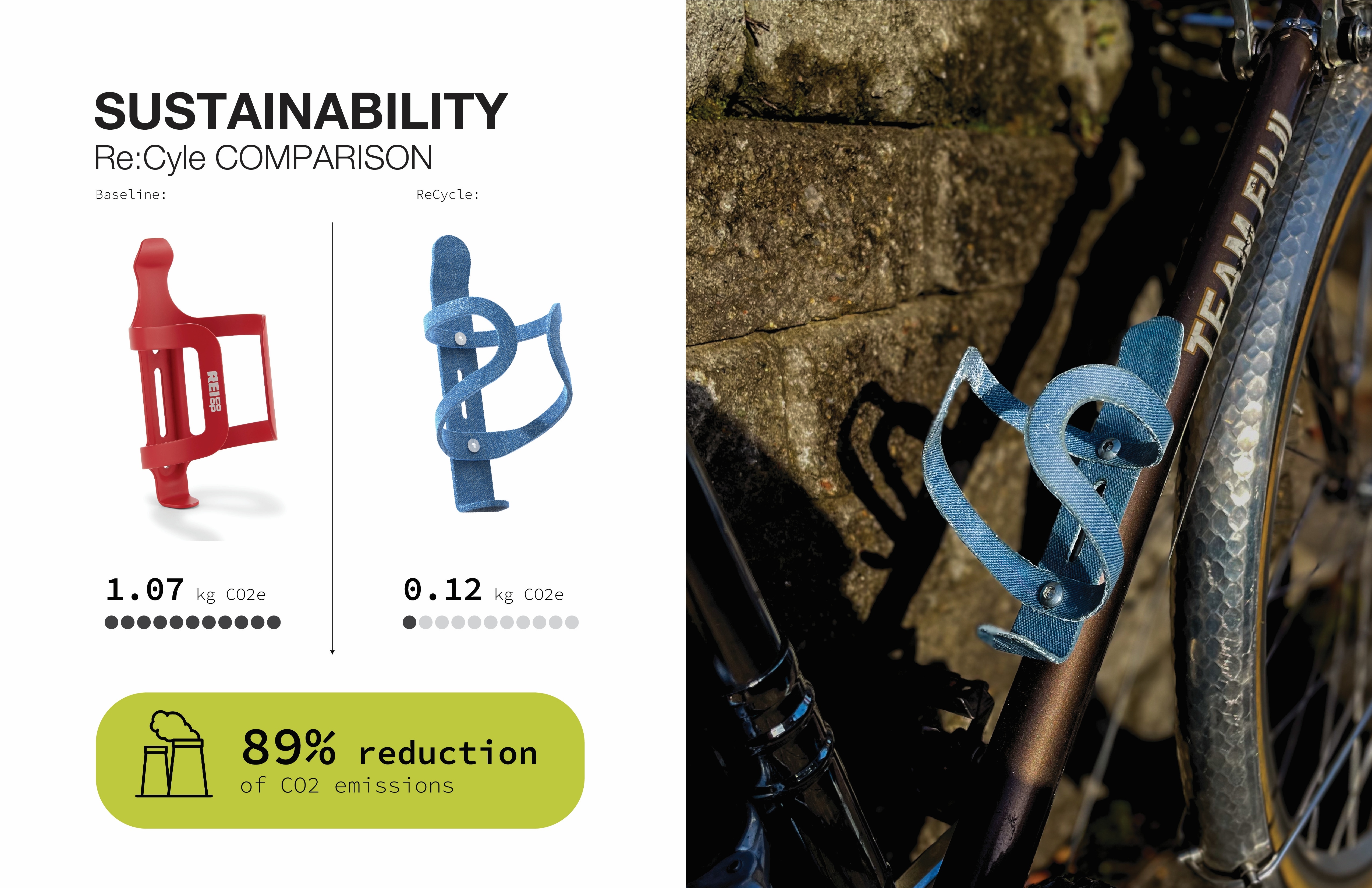
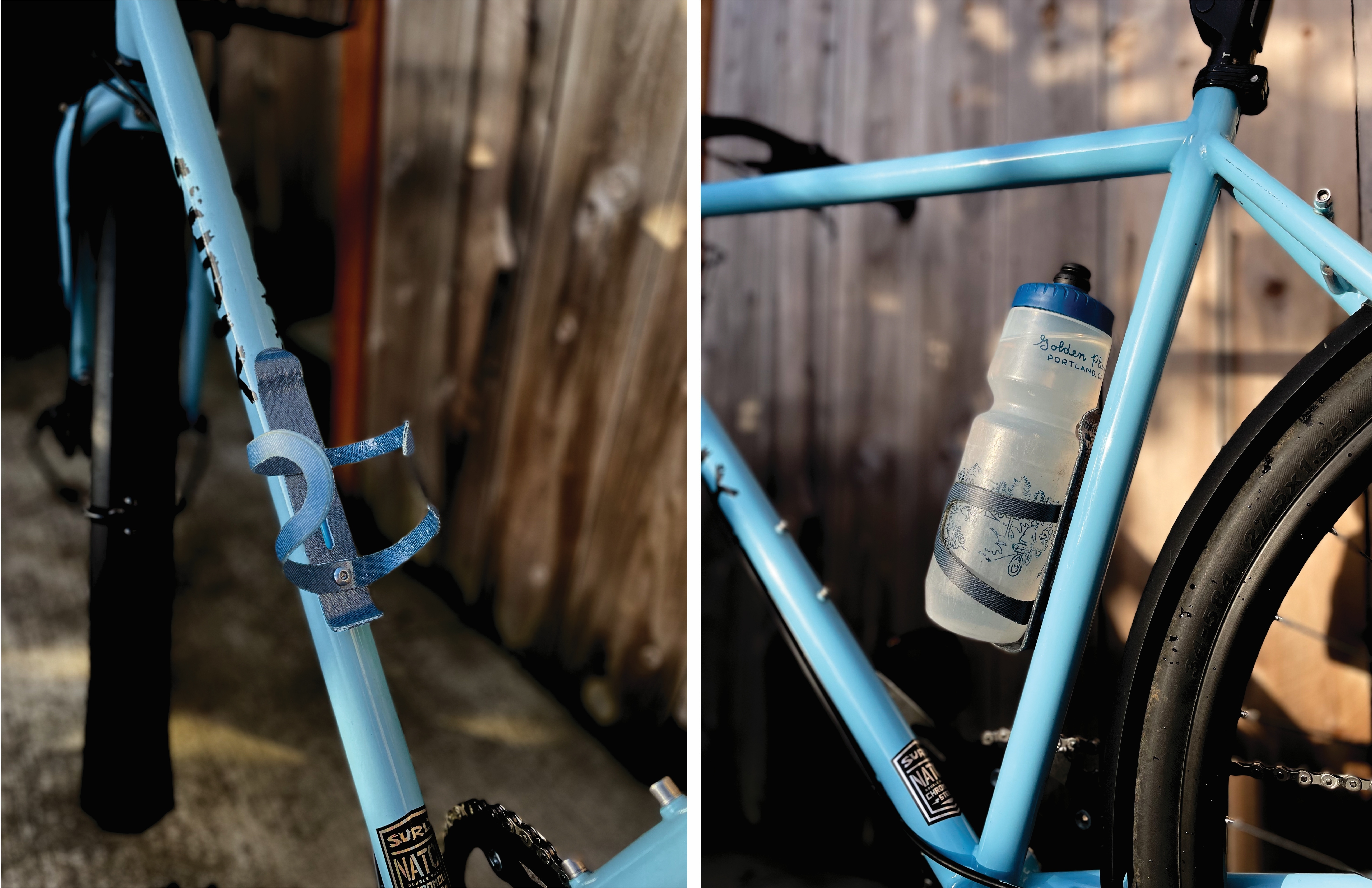
Description This water bottle cage transforms non-recyclable denim waste into a functional cycling component. Using a custom molding process and bio-based resin, discarded textiles are upcycled into a strong, lightweight composite. The design highlights the natural texture of denim while delivering everyday performance, offering a durable alternative to conventional metal or plastic cages.
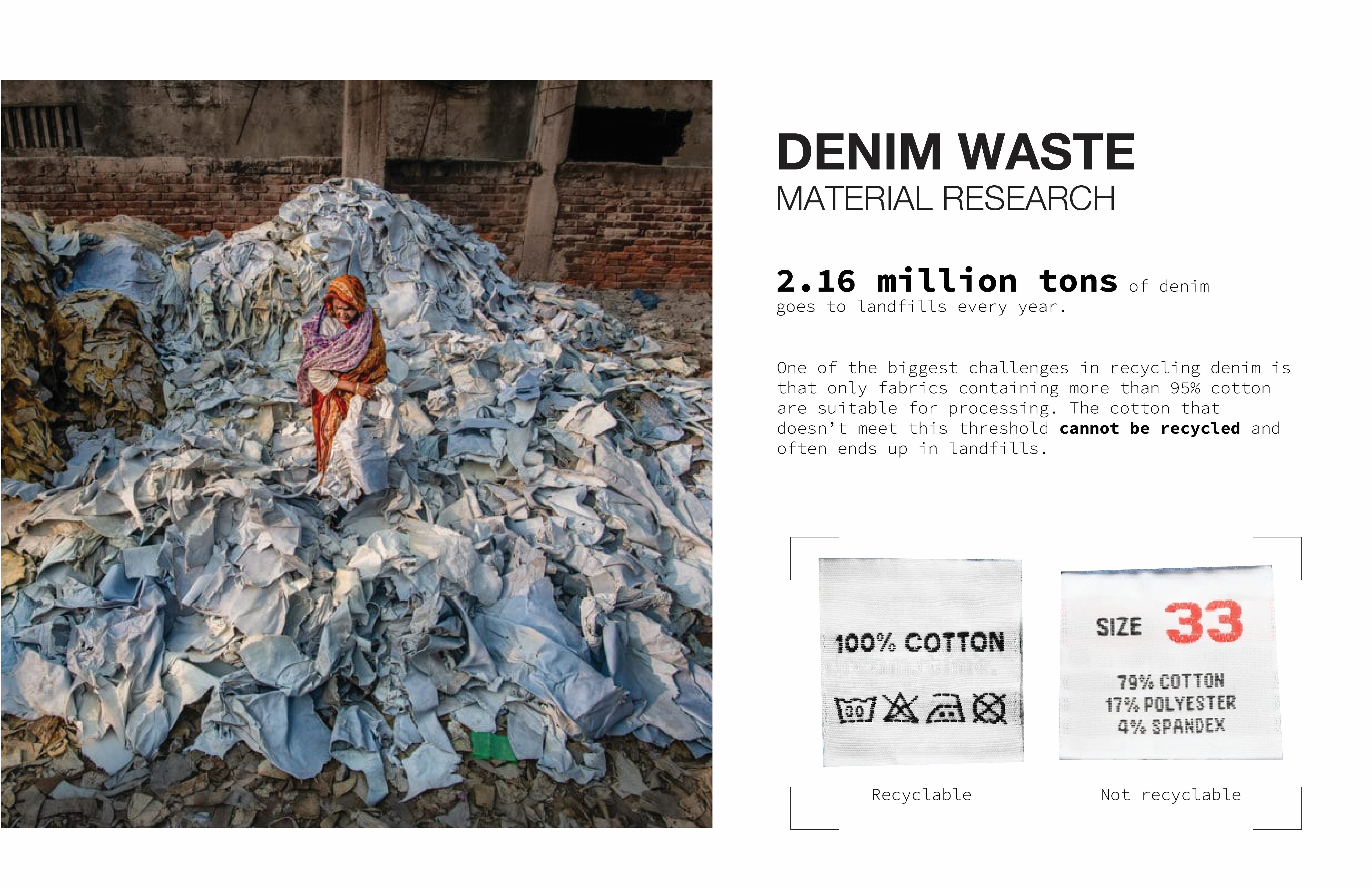
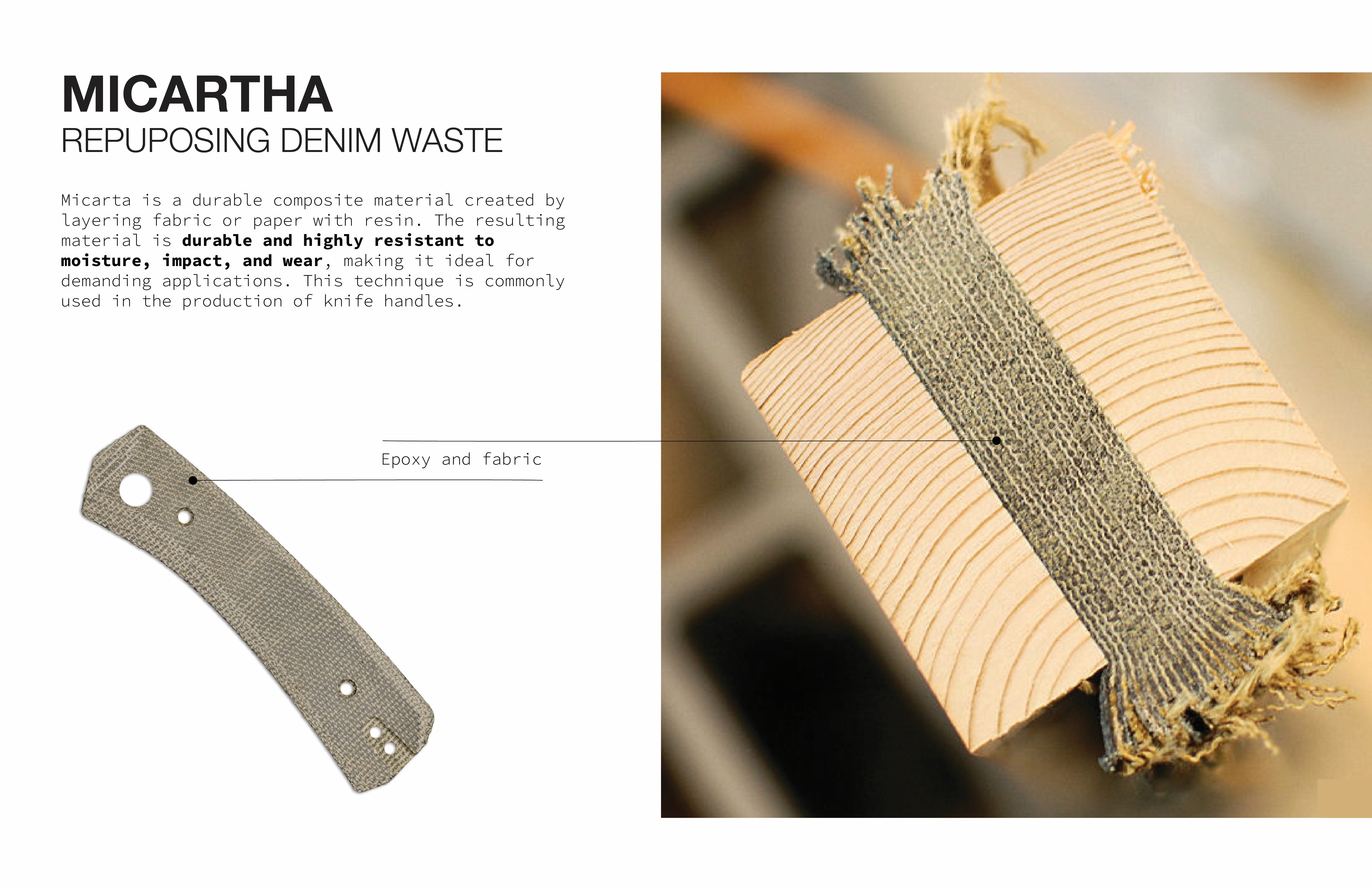
Innovation This project turns non-recyclable denim waste into a durable water bottle cage using a micarta composite manufacturing process with bio-based epoxy. The material choice diverts blended textiles from the landfill and reduces the need for virgin materials.
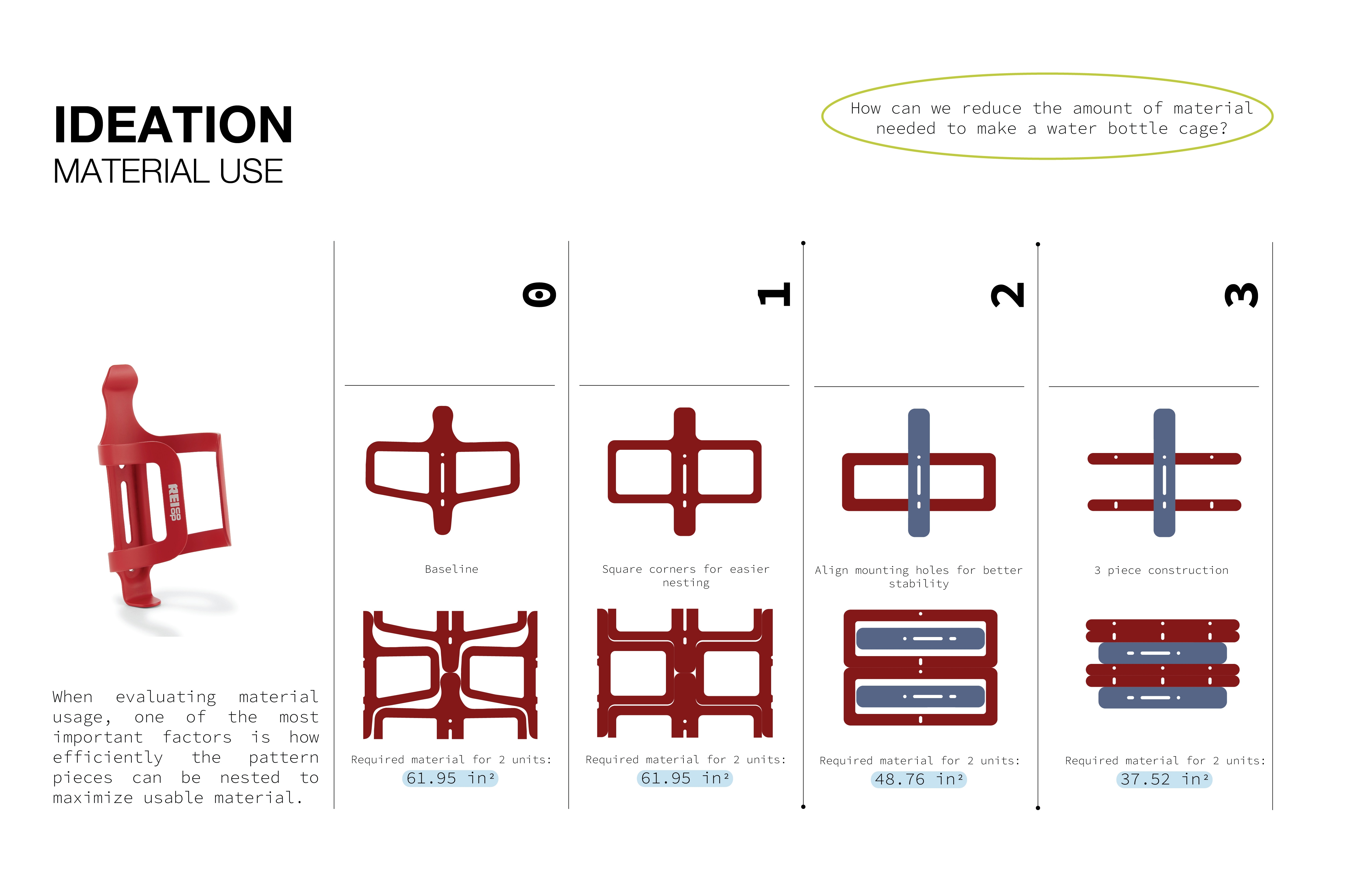
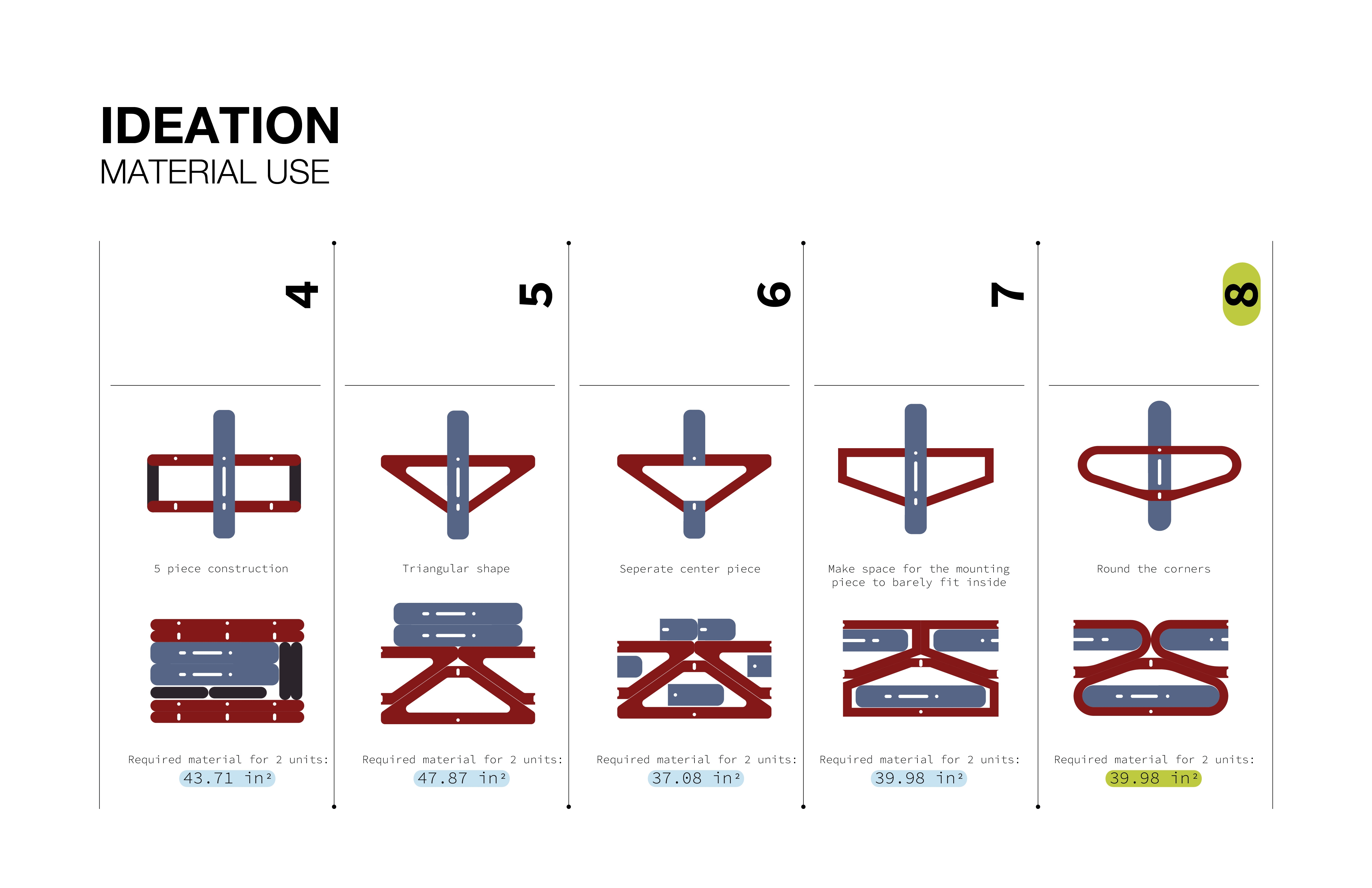
A key innovation is the two-part construction, which allows the components to be nested during cutting. This improves yield efficiency and reduces material waste during production.
Compared to a standard powder-coated aluminum cage, this design achieves an estimated 89% reduction in CO₂e. By using textile waste materials and improving material cutting efficiency, this project shows a practical way to turn low-value textile waste into a high-performance cycling product.
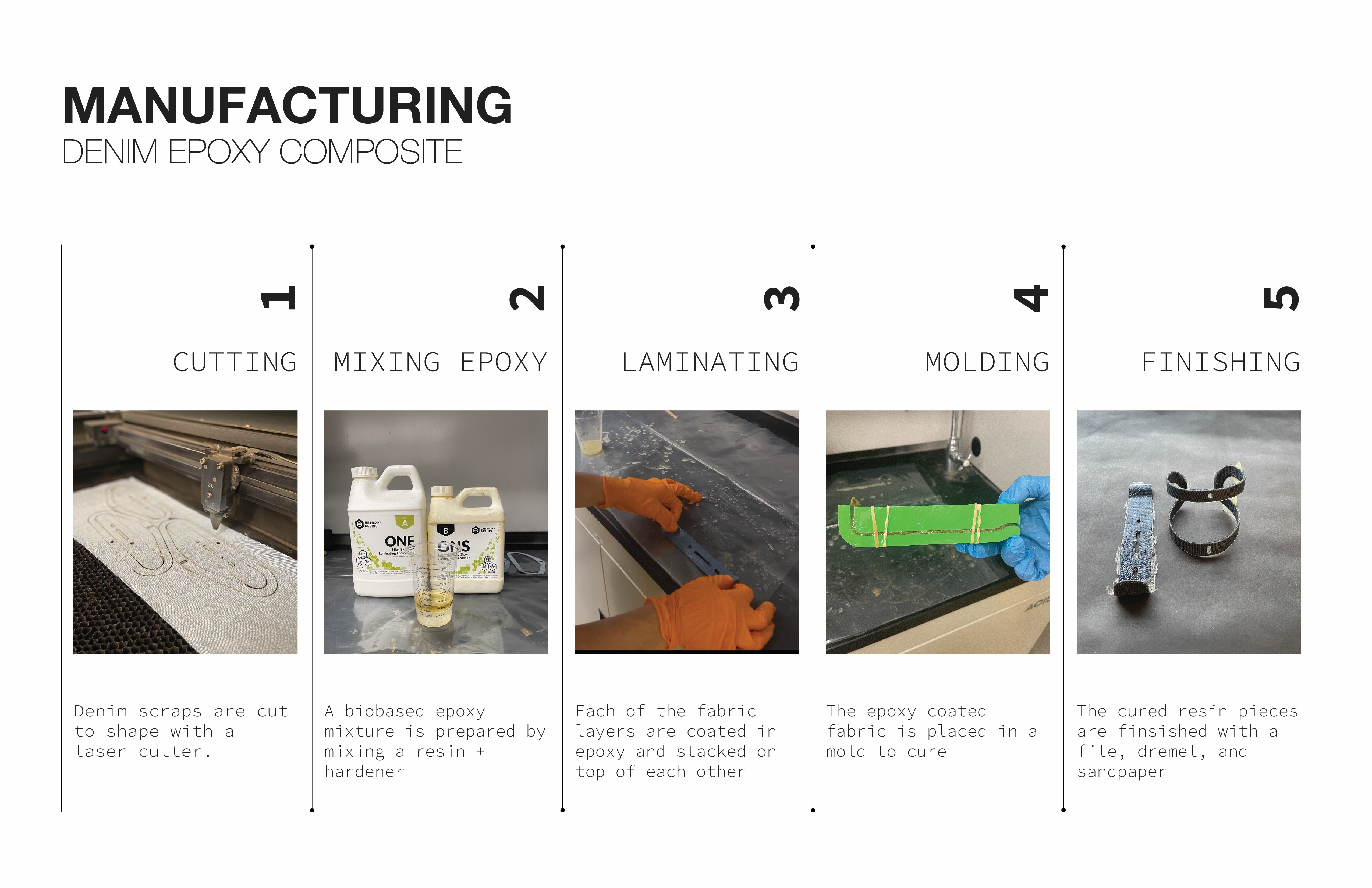
Product Detail This water bottle cage is constructed from upcycled post-consumer denim reinforced with a bio-based epoxy resin to create a durable micarta-style composite. The denim feedstock includes garments that are typically excluded from traditional recycling streams, such as blends containing less than 95% cotton. Layers of cut denim are arranged and compressed within a custom mold, then infused with plant-derived epoxy to form a rigid, structural laminate.
Specification Each unit is unique in color and pattern due to the varied denim source material. The cage is designed as a universal cycling accessory, fitting standard water bottles (73–75 mm diameter) and compatible with most bike frames using standard bolt spacing. Approximate weight is 20–30 grams, depending on material density and resin saturation.