
Description Concussions are a major risk in high-impact sports such as American football, where 67,000 high school football players, for example, are affected each year, and up to 50% of cases go undetected. Many athletes continue playing while injured due to limited access to diagnostic tools, reliance on subjective assessments, and pressure to stay in the game.
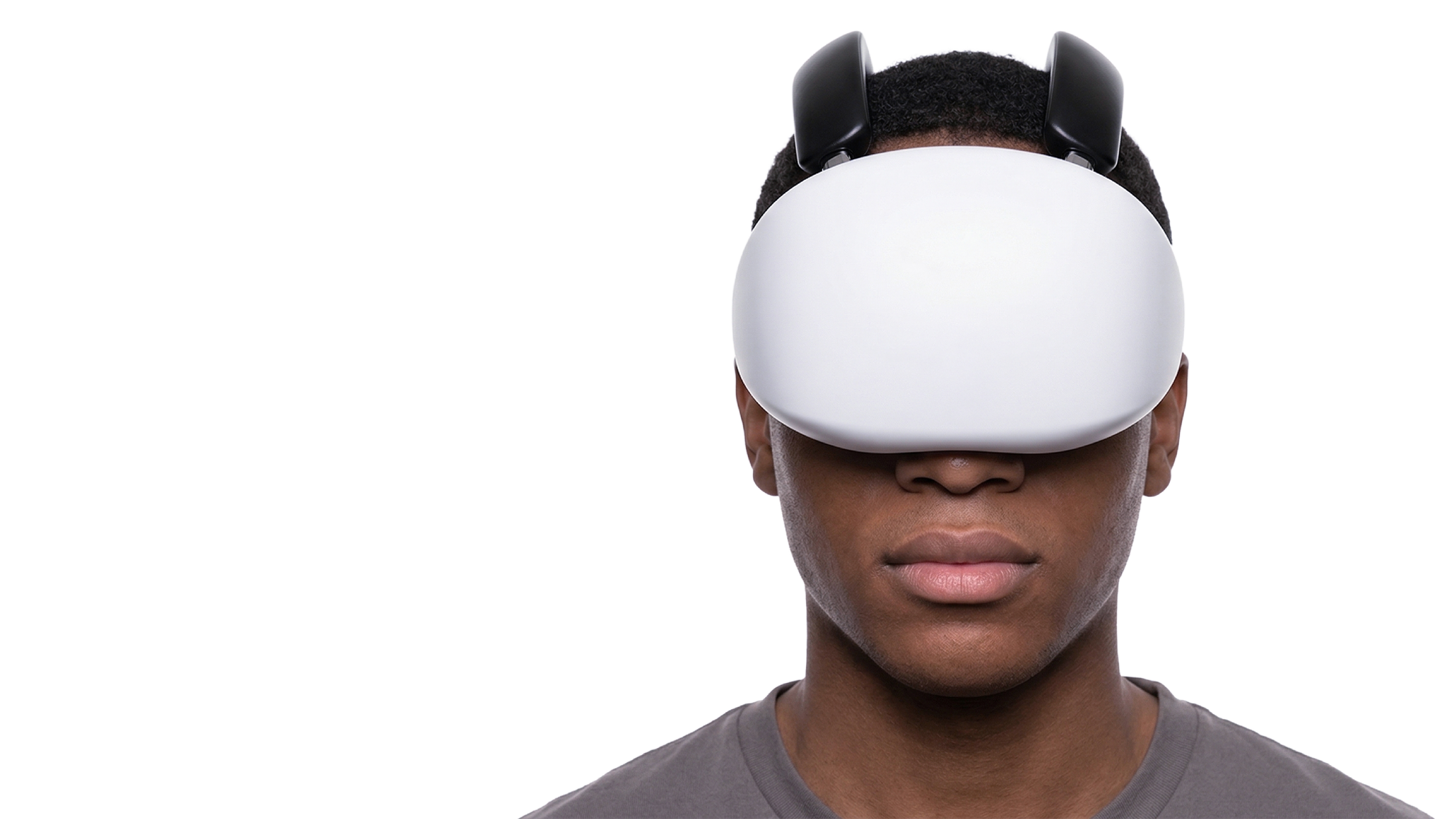
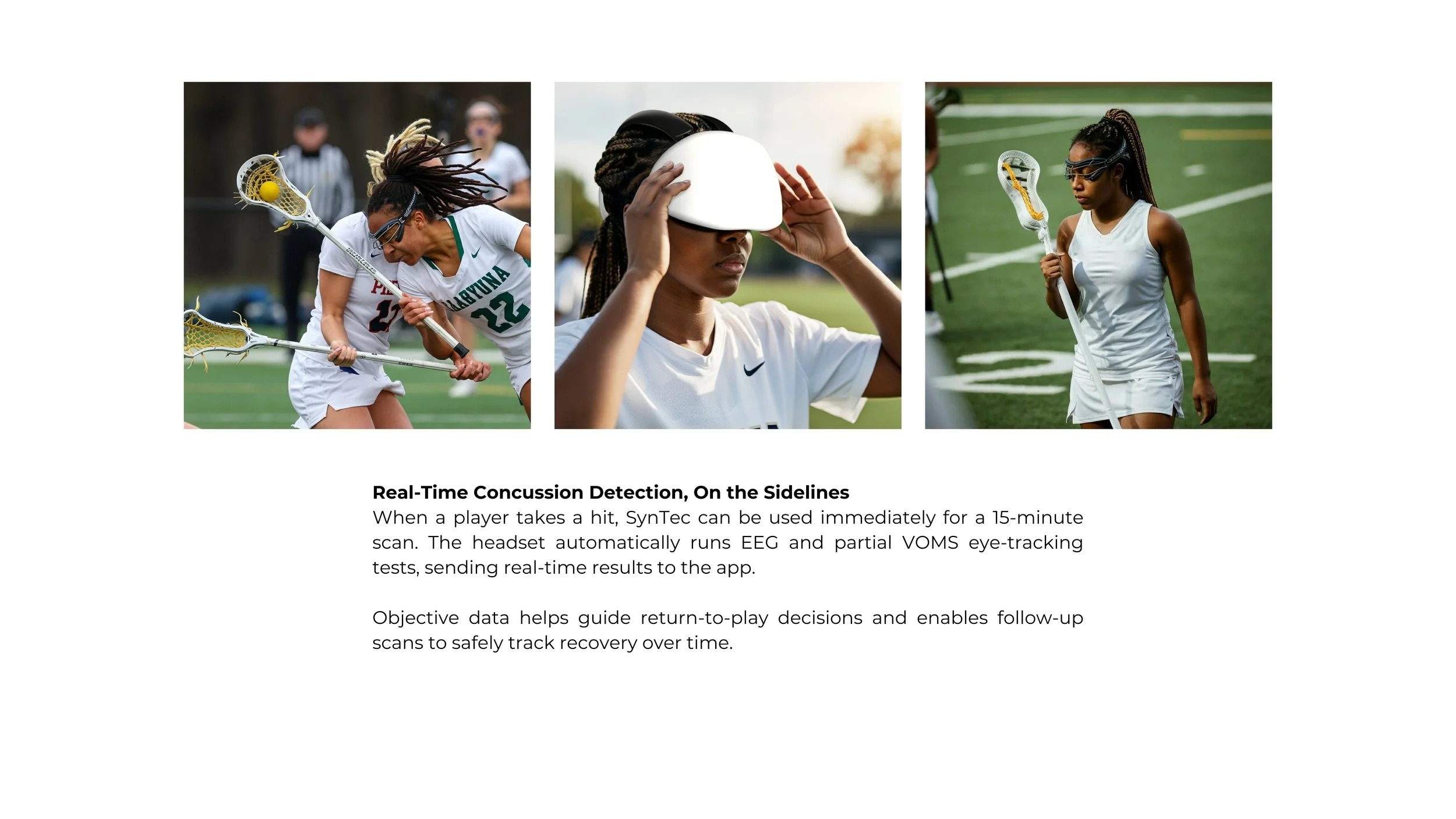
SynTec is a wearable concussion assessment system designed to provide rapid, objective evaluation directly on the sidelines. The device combines eye-tracking technology, using integrated AR-style visual stimuli, with EEG-based brain activity monitoring to deliver a dual-layer assessment within a 15-minute session.
Through a companion mobile application, users receive clear, data-driven feedback and can track recovery over time. Designed for athletes, parents, and coaches, SynTec enables informed decision-making without immediate reliance on clinical environments.
By transforming complex diagnostic methods into a portable and intuitive system, SynTec expands access to brain health tools and supports safer participation in sports.
Innovation SynTec introduces a multimodal approach to concussion assessment by integrating EEG brainwave monitoring with eye-tracking-based vestibular testing into a single, portable device. While existing tools rely on subjective evaluation or single-modality systems, SynTec combines two complementary physiological measurements to improve objectivity in real-world sports environments.
In high-impact sports such as American football, where thousands of athletes experience concussions annually and up to 50% go undetected, timely and accurate diagnosis remains a challenge. SynTec addresses this gap by enabling rapid, on-field assessment without reliance on clinical infrastructure.
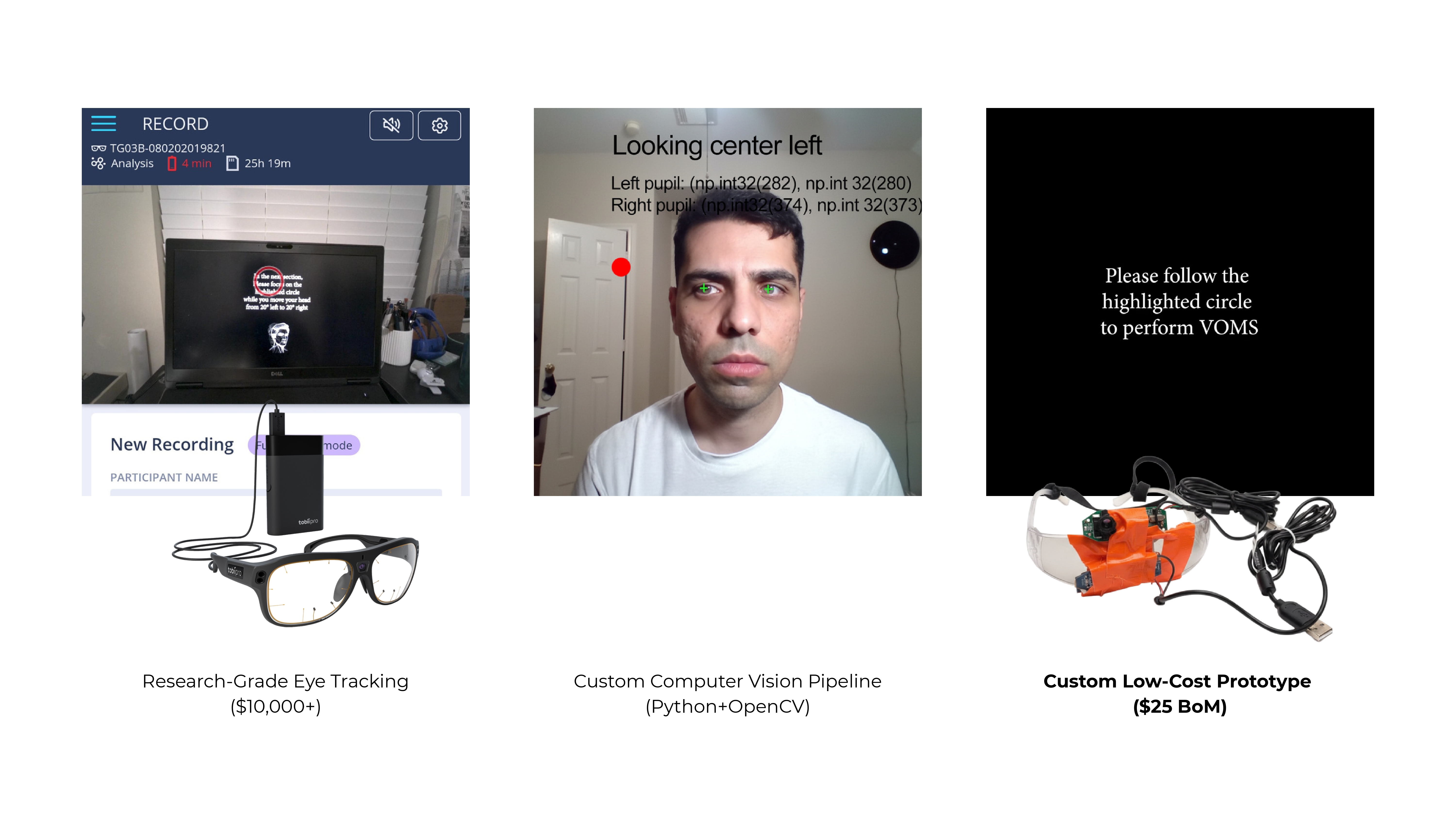
Unlike research-grade systems costing $25,000–$30,000, SynTec achieves comparable functionality through a low-cost hardware approach and a simplified system architecture, significantly increasing accessibility.
By translating clinically established methods such as VOMS and EEG into a self-administered format, SynTec shifts concussion care toward decentralized, preventative monitoring for athletes, coaches, and parents.
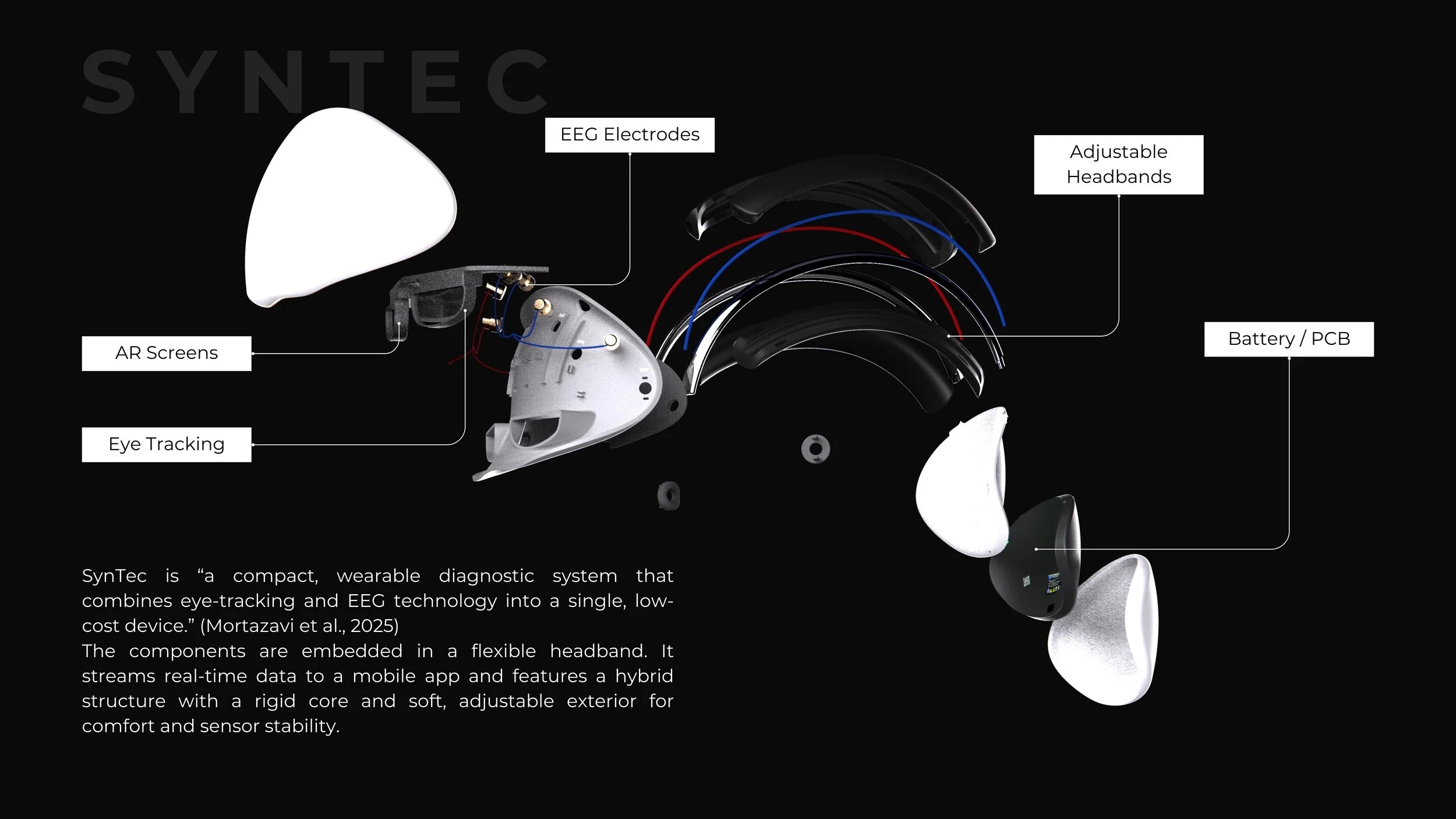
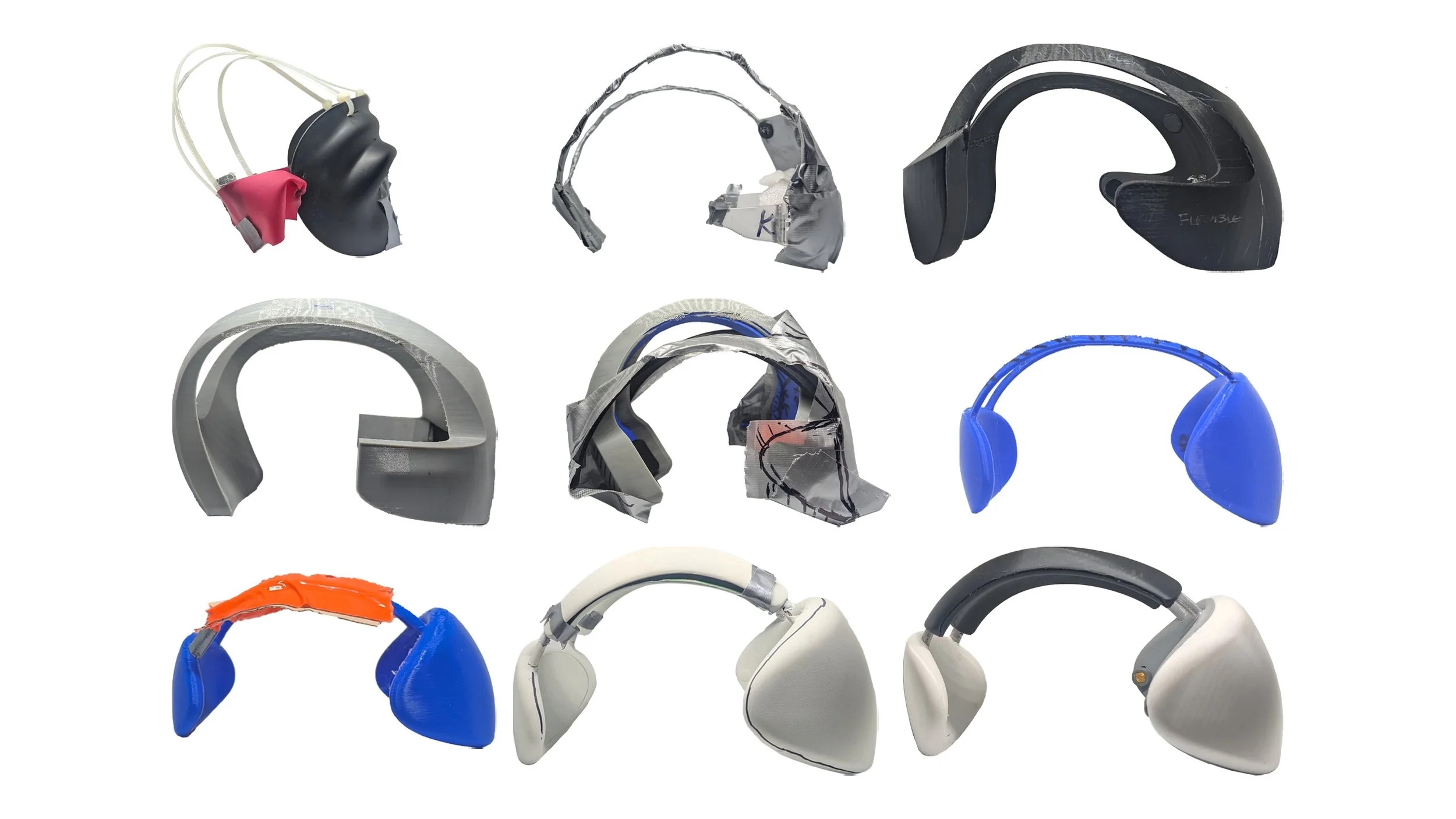
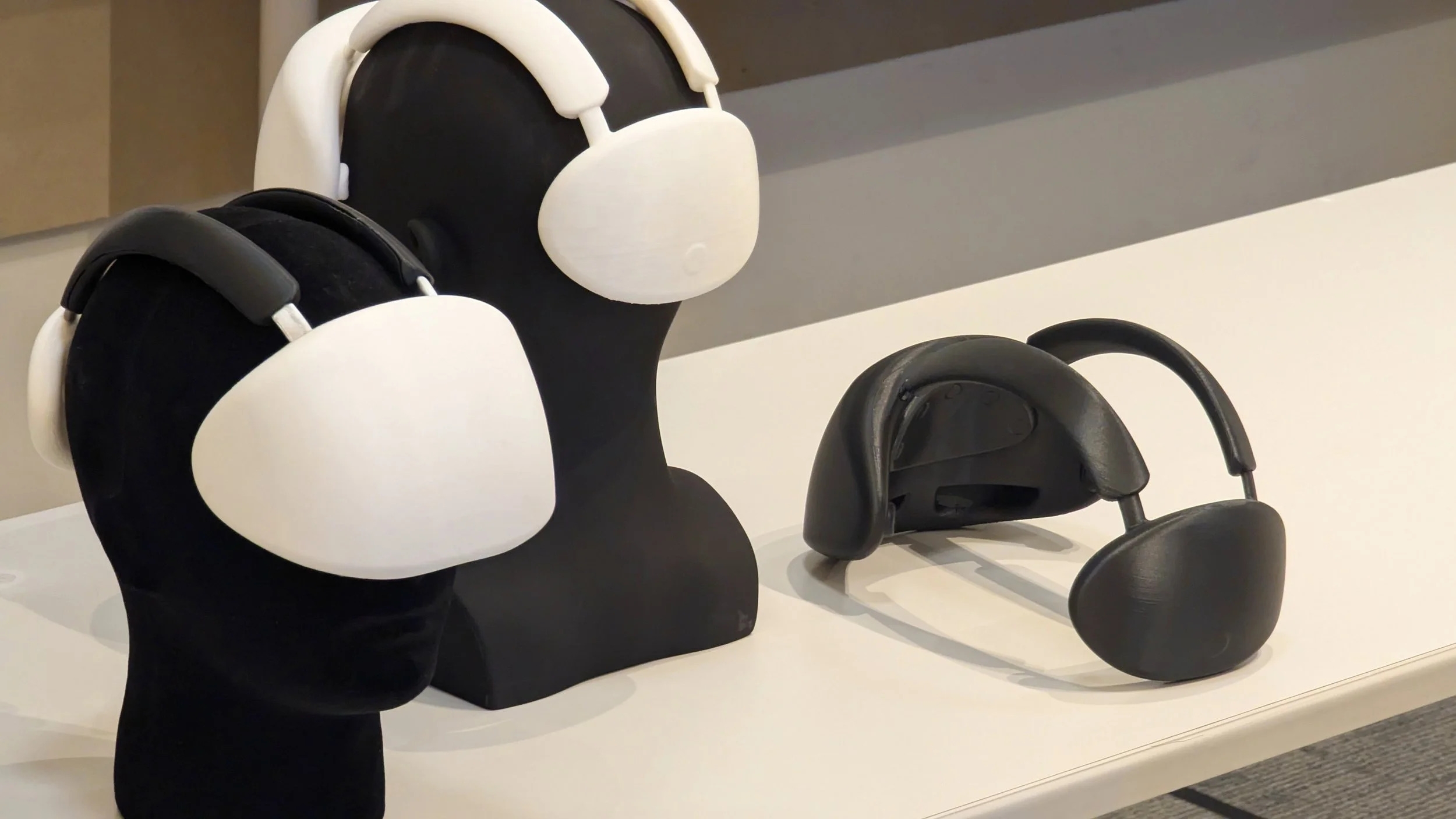
Product Detail SynTec is a wearable concussion assessment headset built around a hybrid structural system consisting of a semi-rigid internal frame and a flexible outer shell to ensure stability and comfort. The headset structure is rigid to maintain consistent electrode placement, while foam padding at the forehead improves comfort where the EEG electrodes make contact.
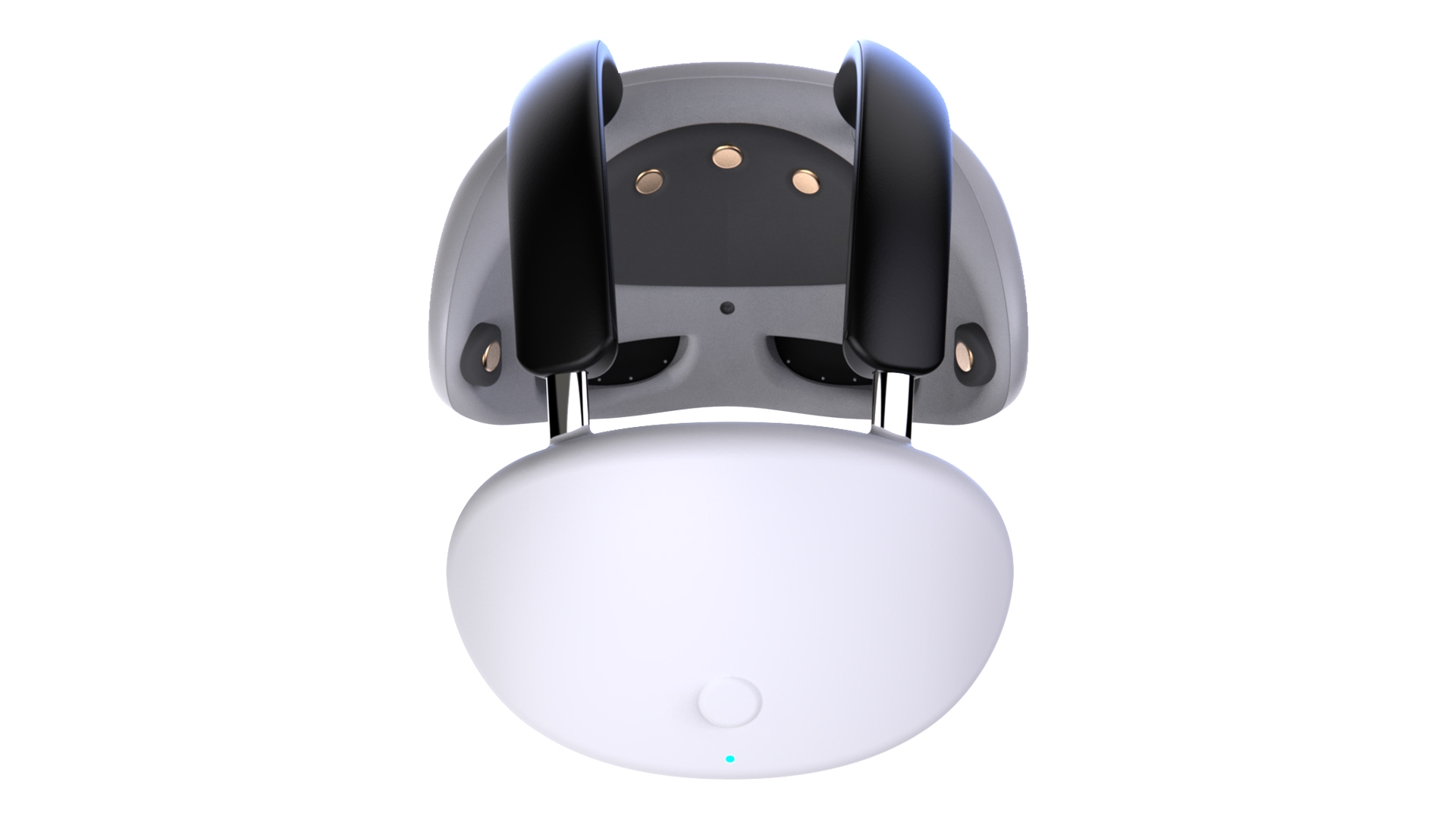
The system integrates five dry-contact EEG electrodes positioned at AF7, FP1, AFZ, FP2, and AF8 for frontal brain activity monitoring. Eye-tracking is achieved through a set of inward-facing cameras that capture gaze movement, while visual stimuli are delivered through integrated AR-style displays positioned behind the cameras, enabling controlled vestibular-ocular testing without external screens.
Adjustable arms allow the device to accommodate a wide range of users. A proximity sensor enables automatic activation, and the system connects to a mobile application for real-time data processing and visualization.
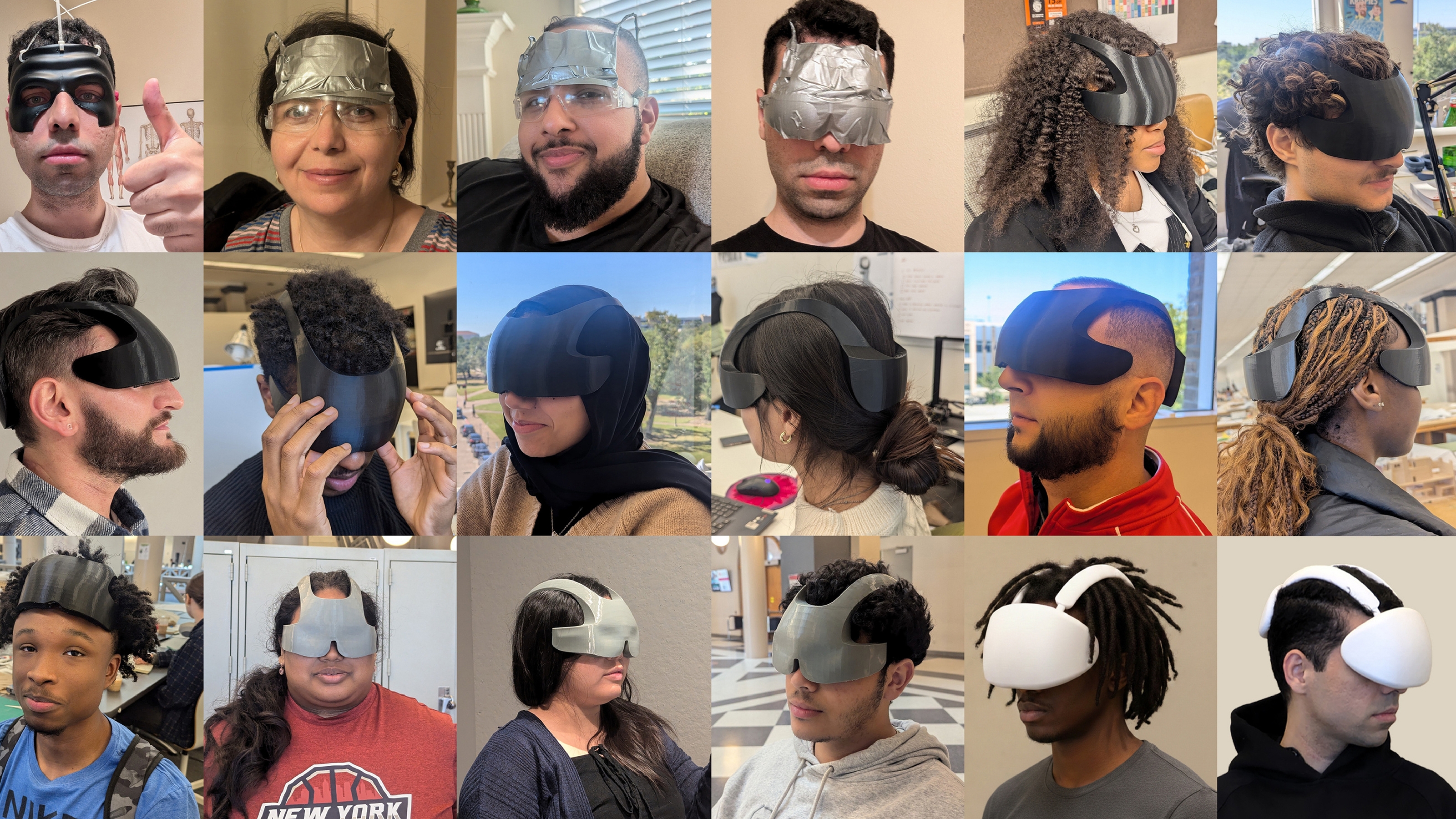
Specification SynTec is a one-size-fits-all headset designed for adolescent and adult athletes of all genders, particularly in high-impact sports such as American football. The adjustable frame accommodates diverse head sizes, hair types, and facial structures.
The device is lightweight and optimized for short-duration use, completing a full assessment in approximately 15 minutes. It features a neutral, non-intrusive color palette suitable for sideline environments.
The system operates with a companion mobile application and requires minimal setup, with optional baseline calibration for increased accuracy. It is designed for use on the sidelines, in training facilities, or at home without requiring specialized personnel or clinical infrastructure.
Bio Industrial designer focused on wearable technologies that enhance human movement, health, and accessibility. My work explores the intersection of biomechanics, soft goods, and embedded systems, with a strong emphasis on real-world usability and human variability. I design with the belief that thoughtful, accessible solutions can improve performance, reduce injury, and expand participation across diverse populations.